




Villain Playbook: The Benevolent Tyrant — Creating a Memorable D&D Villain
Last time in our Villain Playbook series, we went all the way to the end of the world with The World Ender, a villain who doesn’t want a kingdom, riches, revenge, or even power. They simply want existence itself to come to an end.
This week, we’re going in the opposite direction.
The Benevolent Tyrant wants everyone to live.
They want people to be safe.
They want the hungry to be fed, the sick to be healed, the streets to be free of crime, and the kingdom to prosper.
There is just one problem.
Everyone has to obey them.
The Benevolent Tyrant doesn’t believe they’re evil.
They believe they’re the only person capable of saving everyone.
And the worst part?
They might actually be making the world a better place.
What Is the Benevolent Tyrant Villain Archetype?

The Benevolent Tyrant is a ruler who uses authoritarian control to create what they believe is a better society.
They aren’t interested in destruction for its own sake. They don’t necessarily crave wealth or personal glory. In fact, they may be remarkably selfless.
They work constantly.
They sacrifice their own happiness.
They make difficult decisions nobody else is willing to make.
Under their rule, the kingdom may genuinely become safer.
Banditry disappears.
Food becomes plentiful.
The streets are clean.
The wealthy pay their fair share.
The poor receive support.
Corrupt officials are removed.
Crime is punished swiftly.
The kingdom looks like a utopia.
But there is a price.
Freedom.
The Benevolent Tyrant has decided that people cannot be trusted to make the right choices for themselves.
So they make those choices for them.
Why the Benevolent Tyrant Makes a Great D&D Villain
The easiest villains to defeat are the ones everyone agrees are evil.
The Benevolent Tyrant is much harder.
The players may hear stories about how terrible the old kingdom was before this ruler came to power. They may meet people who genuinely love their leader. They may discover that entire communities have benefited from the changes.
The villain can point to results.
“You say I am a tyrant,” they might tell the heroes. “But when was the last time a child in this city went hungry?”
That’s difficult to argue with.
Especially when it’s true.
The Benevolent Tyrant forces players to consider an uncomfortable question.
How much freedom would you sacrifice for a safer world?
Would you give up privacy if it meant nobody could commit a crime?
Would you accept strict laws if they eliminated hunger?
Would you surrender political freedom if it guaranteed peace?
And who gets to decide where the line is?
How to Introduce a Benevolent Tyrant in Your Campaign

Don’t introduce this villain as a tyrant.
Introduce them as a success story.
Let the players arrive in a kingdom that appears almost impossibly prosperous.
The roads are safe.
The inns are clean.
The city watch is efficient.
There are public hospitals and food distribution centers.
Even the poorest citizens have access to basic necessities.
The party may initially wonder if they’ve stumbled into one of the best-run kingdoms in the world.
Then they notice the statues.
Every street has one.
The ruler is depicted as a protector, a healer, a teacher, and a guardian.
Children are taught to admire them.
Citizens are encouraged to report suspicious behavior.
The party might even be invited to a celebration honoring the ruler for another year without war, famine, or major crime.
Everything is wonderful.
Almost.
Then someone quietly asks the adventurers for help.
They want to leave.
They aren’t allowed.
The Price of Perfection
The Benevolent Tyrant’s kingdom should have rules that initially seem reasonable.
Weapons may need to be registered.
Travel between cities might require permission.
Magic could be carefully regulated.
Public gatherings may require government approval.
Certain books may be forbidden because they contain dangerous ideas.
Citizens could be monitored through magical wards designed to prevent crime.
None of these policies sound particularly horrifying on their own.
That’s the point.
The villain didn’t create tyranny overnight.
They created it one reasonable law at a time.
Every restriction exists because something bad happened.
A terrorist attack led to increased surveillance.
A plague led to travel restrictions.
A rebellion led to limits on public gatherings.
A magical catastrophe led to restrictions on spellcasting.
The ruler can explain every law.
And every explanation makes sense.
How the Benevolent Tyrant Controls the Kingdom

Fear isn’t necessarily the primary tool.
Dependence is much more effective.
The kingdom provides everything people need.
Food.
Medicine.
Housing.
Security.
Education.
Employment.
The people don’t need to rebel because rebellion means giving up everything that makes their lives comfortable.
The government might even encourage criticism.
Citizens can submit complaints and petitions through official channels.
The tyrant listens.
They simply don’t have to change anything.
This creates a particularly unsettling form of authoritarianism because the ruler can honestly claim to care about their people.
They aren’t lying when they say they want everyone to be happy.
They simply believe they know what happiness should look like.
Running the Benevolent Tyrant Beyond Combat
The Benevolent Tyrant should make the players hesitate before drawing their weapons.
If the party attacks the ruler, the royal guard responds.
But the guards aren’t monsters.
They’re protecting their families.
The citizens aren’t cheering for the heroes.
They’re terrified that the adventurers are going to destroy the peace they’ve worked so hard to build.
Even the party’s allies may disagree.
One NPC might say the ruler saved their village from famine.
Another might explain that their child received life-saving treatment from a government hospital.
Someone else might quietly tell the heroes that their brother disappeared after criticizing the regime.
Everyone has a different experience.
That’s what makes the villain work.
The kingdom isn’t secretly a horrible place.
It’s genuinely better in many ways.
It’s simply no longer free.
The Benevolent Tyrant’s Greatest Weakness

Just because it’s a structure built of bones doesn’t mean Kalarel the Vile is behind it! But it wouldn’t be terribly shocking though, would it?
The Benevolent Tyrant has one major weakness.
They cannot tolerate uncertainty.
Their entire philosophy depends on believing that they know what is best.
If something unexpected happens, they struggle to accept it.
This can manifest in several ways.
Perhaps they refuse to delegate important decisions.
Maybe they secretly maintain enormous magical databases tracking every citizen.
They could have diviners monitoring potential threats years before they become problems.
The ruler may even manipulate events to prevent choices they believe will lead to disaster.
Eventually, the heroes can exploit this obsession.
They create situations the tyrant cannot predict.
They introduce variables the ruler cannot control.
They force the villain to confront the possibility that their perfect system isn’t perfect.
Using the Benevolent Tyrant to Create Memorable D&D Stories
The best Benevolent Tyrant stories don’t ask the players to overthrow an evil ruler.
They ask them to decide whether the ruler should be overthrown at all.
Perhaps the heroes uncover evidence of political prisoners.
But freeing them could destabilize the kingdom.
Maybe they discover the ruler has prevented three wars through secret assassinations.
Removing them might result in thousands of deaths.
Perhaps the tyrant uses powerful magic to prevent citizens from committing violent crimes.
Is removing that magic worth the freedom it provides?
There may not be a perfect answer.
That’s exactly what makes the villain memorable.
The players aren’t choosing between good and evil.
They’re choosing between different versions of good.
When the Benevolent Tyrant Finally Goes Too Far
Eventually, every Benevolent Tyrant has to cross a line.
Perhaps they decide that free will itself is the source of suffering.
Maybe they’ve developed a magical ritual that can eliminate hatred, greed, anger, and violence from every citizen.
The kingdom would become peaceful forever.
Nobody would murder.
Nobody would steal.
Nobody would wage war.
Nobody would hate.
But nobody would truly choose anything anymore.
The heroes now have a very different kind of final confrontation.
They aren’t fighting to stop a fireball.
They’re fighting to preserve the right of people to make terrible decisions.
The tyrant might genuinely believe the heroes are destroying paradise.
And from their perspective, they may be right.
The Final Confrontation
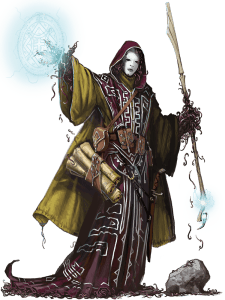
Speaking of alien…the star spawn larva mage as seen in the fifth edition Dungeons & Dragons Mordenkainen’s Tome of Foes. [Image courtesy Wizards of the Coast]
The final battle with a Benevolent Tyrant doesn’t have to happen in a throne room.
It could happen inside the magical machine maintaining the kingdom’s perfect order.
Perhaps the heroes have to destroy the network of enchantments monitoring the population.
Maybe they must convince the ruler’s closest advisors to turn against them.
Perhaps the final confrontation is a public debate where the party must convince an entire kingdom that freedom is worth the risk.
Or the heroes could simply have to survive long enough for the ruler’s carefully constructed system to collapse.
Whatever form it takes, the final confrontation should force the players to confront the central question of the villain.
Is a world without suffering worth a world without choice?
The Benevolent Tyrant already has their answer.
The heroes have to find theirs.
Continue the Villain Playbook Series
If you missed the previous installment, check out Villain Playbook: The World Ender, where we explored a villain willing to destroy everything rather than accept a broken world.
The Villain Playbook series continues to explore different villain archetypes that Dungeon Masters can adapt to almost any campaign. Each villain approaches power differently, giving DMs tools for creating conflicts that go beyond the traditional evil wizard waiting at the end of a dungeon.
So far, we’ve explored villains who manipulate reputation, ideals, power, faith, choice, time, criminal networks, kingdoms, and even reality itself.
Next time, we’re getting a little more personal.
The Fallen Paladin was once everything a hero should be.
They were honorable.
They were devoted.
They were trusted.
And then something happened that made them turn their back on everything they once believed.
The question isn’t simply how the heroes defeat them.
It’s whether they can bring them back.
Thanks for reading. Until Next Time, Stay Nerdy!!




No Comments